Haunted by Myth
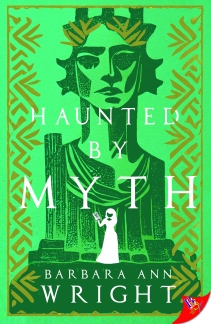
Chloe knew her future would be boring. Every job pales in comparison to the family legacy: hunting monsters and banishing ghosts. But that birthright belongs to her mother and sister, leaving Chloe forever outside looking in. Until her sister dies without warning. Chloe gets the family magic, a lack of self-confidence, a grieving mother, a sarcastic spirit guide, and room for nothing else, especially love. And lately, someone seems to be summoning ghosts and protecting monsters, and all clues point to one very famous face: Helen of Troy.
Helen has spent hundreds of years running a sanctuary and rehab for the last mythical creatures on earth. And she has a huge chip on her shoulder about that whole Trojan War thing. Neither she nor Chloe has time for the other’s philosophy or to see if their growing attraction is more than skin-deep, not when there are some monsters that won’t be sent to the Underworld without a fight.
Buy it now from the Bold Strokes Books webstore.
Reviews for Haunted by Myth
“Haunted by Myth was a fun read that manages to do something new and original with the urban fantasy genre. Barbara Ann Wright concocts a literary spell with a dash of ghosts, a sprinkle of monsters, and a pinch of Greek mythology, stirring it with a wink and a nod as she allows a magical age-gap romance to simmer and steam…There’s a whole cast of supporting characters to the story, both human and otherwise, which adds to the wonder, the mystery, and the humor of the world that Wright has created…Chloe is a wonderful young woman who must put her doubts and fears behind her if she is to embrace her destiny. While Helen may be older and wiser, she is not without her doubts as well, especially when it comes to humanity. They bring out the best in each other.
Fast-paced and fun, full of imagination and emotion, Haunted by Myth was a thoroughly entertaining read with plenty of LGBTQIA positivity.” —Bending the Bookshelf
Netgalley Reviews
-
- “This was a fun read. Great for fans of myth, magic, and female characters coming together…Wright is talented enough to bring in these threads, then going on to provide detailed and vivid action scenes…”
- “Anyone else have some family gifts they’d really rather not have? Chloe certainly does. She wasn’t supposed to get them. Her sister was going to inherit the gift while Chloe tried to enjoy the life of a tech writer. But now, she has goblins and ghosts she has to hunt instead. Luckily the ghost of an Egyptian pharaoh is (mostly) happy to assist, unless it gets in the way of his programs, and along the way a somewhat useless demon joins the mess.Whereas, Helen (don’t even think of adding: of Troy) has dedicated this portion of her incredibly long life to creating a sanctuary to protect beings like her, no matter how chaotic or how much trouble they cause. All it takes for them to come together is something that is not a griffin.This book is a whirlwind of mythologies, creatures, and unlikely bonds. It has excellent LGBTQ representation, and the plot will keep you guessing!”
- “Haunted by Myth by is a Sapphic contemporary fantasy novel that shifts POVs between Chloe, a monster hunter similar to Buffy the Vampire Slayer and Supernatural, and Helen of Troy, a demigod who has been roaming the world and protecting mythical creatures.Chloe comes from a line of monster hunters who are descended from the Pharaoh Ramses and his ghost follows the hunter around to assist them. Ramses and Chloe have an interesting dynamic as Ramses has always been part of her life and he loves modern TV, but Chloe is kept in the dark about certain parts of her role as a monster hunter and her heritage.When Chloe and Helen meet, it’s an almost instant attraction that eventually develops into a romantic relationship as they team up to destroy a much larger enemy.
I really liked the sea creature network and that different whales have different habits when it comes to information. I also liked the idea of a ghostly ancestor who is bound to their family tree and assists them in hunting down ghosts and other supernatural beings.
I would recommend this to fans of Buffy and Supernatural, to those looking for Millennial slang in their contemporary fantasy, and readers who want Greek mythology reimagings with a Queer twist.”
- “I loved the use of Helen of Troy in this novel, it had everything that I was looking for when requesting this. I loved the mythological elements and how the characters worked with them. Barbara Ann Wright does a great job in writing this and creating characters that worked in the story and the Greek mythology.”
- “A unique story with Queer rep. I loved the pacing and characters. Chloe is a ghost and monster hunter who is trying to banish the rising number of creatures that keep showing up on Earth. Helen is a demigoddess who created a sanctuary for these same creatures. When Chloe finds out about the sanctuary, she has to decide to keep up her ways or help Helen. Their feelings for each other grow, but maybe not in the way they expected.”
- “This book was amazing.I don’t really read urban fantasy or romance and this is definitely a mix of the two (although the sex scenes are skipped so it’s safe for YA). That said, I really loved this one – the sapphic romance is full of tension and longing and the creatures (we won’t say monsters) are fantastical while being infinitely relatable.Definitely will be picking up more by @barbaraannwright.”
- “..The story immediately grabbed me and I enjoyed its fast pace. The relationship between Chloe and Ramses is very entertaining while also being satisfyingly wholesome. I do not have a strong knowledge of mythology, but the addition of those aspects grabbed my interest. I liked the relationship between Chloe and Helen, but thought it was a little rushed, and I could have used better closure of them finally acting on their feelings toward each other. Overall, it was a very enjoyable read and I would recommend it to fantasy readers!”
- See more Netgalley reviews on the BSB website.
The Noble and the Nightingale
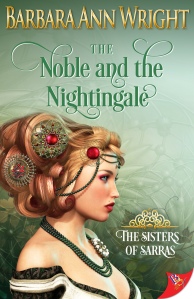
Adella del Amanecer is from a noble family whose pride comes from dedication to the kingdom of Sarras. She works long hours as a diplomat and barely has time for her sisters, let alone romance, a fact that makes her nights feel longer than her days, especially when she thinks about the lovely bard on the corner.
As an ex-spy for the Firellian Empire, Bridget Leir has fled from crises and corruption until settling in Sarras, where she can hide as a bard. When a chance meeting with a beautiful diplomat leads to romance, Bridget’s new life feels filled with promise, until Sarras investigates Firellian rumblings of war. If the truth comes out, the Sarrasians—and Adella—will never believe Bridget’s spying days are done, and worse—Adella will be accused of sleeping with the enemy. It’ll be the gallows for them both.
Buy it now on the Bold Strokes webstore.
Reviews for The Noble and the Nightingale
“Wright sets up the Sisters of Sarras…with solid worldbuilding, a delightfully awkward couple who bridge social realms, and an entertaining adventure that leaves plenty of room to grow…this is perfect for those who prefer their romances emotional but not explicit. By the end, Wright has established strong personalities for Adella’s two sisters and taken the suspense plotline to the brink of war between Sarras and the Firellians, setting up strongly for the next volumes. Readers will be pleased.” —Publishers Weekly
“Only Barbara Ann Wright can weave a satisfying romance from nothing more than looks of longing, stolen kisses, and hand-holding. Adella and Bridget…are a delightful couple with unmistakable chemistry, and the way they bring two worlds together is absolutely delightful.
Beneath the romance there’s an enthralling political fantasy, a story of ambassadors, spies, thieves, assassins, smugglers, soldiers, and mages, all tied up in that romance. In fact, there are passages where the romance is so powerful, so emotionally engaging, that you can almost forget there’s a murder to be solved. In terms of action, this is a rollicking read, surprisingly violent at times, with daring escapes and even more daring rescues throughout.
As always with Wright, the world-building here is superb, especially in regards to the clothing, hairstyles, and jewelry. Everything has meaning, cultural significance, but it’s all subtly done, costuming the characters as opposed to defining them. The matter-of-fact acceptance of gender and sexuality is wonderful as well, from nobody batting at an eye at the romance between Adella and Bridget, women from different classes, to nobody questioning the gender fluidity of Serrah Nunez (seriously, if they’re not back for the next book, I’ll be very disappointed).
There is some definite angst to the story, driven by secrets, but with Wright we can trust that all will be okay. The Noble and the Nightingale is an entirely satisfying addition to the shelves of Barbara Ann Wright, who somehow finds fresh ways to blend fantasy and romance with characters worthy of their settings.” —Beauty in Ruins
“When I heard that Barbara Ann Wright was starting a new fantasy series about three sisters…I knew I wanted to read these books. The Noble and the Nightingale is a very intriguing beginning to this series…This novel has something for everyone…The tale is well-written. The setting and world building is superb. The characters are well developed and easy to connect with. The story kept my interest from the first page to the last.” –Rainbow Reflections
“This book was a ton of fun…I think it is very approachable for all types of readers…I ended up reading this book until 3 [a.m.] because I had to know how everything would unfold and what would happen to all the characters…This is the kind of story to take you on an adventure and just have fun with. Not only could I not stop reading this book, but it put a big smile on my face. I’m a happy reader.” — Lez Review Books
Netgalley Reviews
-
- “The story was imaginative and suspenseful. An ex-spy and young ambassador start a relationship in the midst of a murder. As they try to maneuver through danger, uncovered lies, deception, and blackmail they simultaneously fall further for each other and into trouble….I really enjoyed it and can’t wait for more books in the series.”
-
- “I found this a very engaging read and struggled to put the book down – the murder storyline was well-written with several twists, the supporting characters were all very intriguing and you never knew who to trust…The lead characters were made even more likeable by their flaws and insecurities and I enjoyed their inner musings. I look forward to reading Gisele and Zara’s stories.””An interesting read with a mixture of mystery, thriller, adventure, suspense and magic. Great dialogue with amazing main and rich secondary characters. I loved the bond between the sisters even though they bicker at times. I recommend…”
-
- “Interesting mix of genres. You have romance, mystery, suspense, historical, and paranormal elements in this story. I thought it was very well written and the main characters and supporting characters were very intriguing. I actually couldn’t stop reading this book the romance was sweet but that wasn’t the highlight of this story the highlight was really the magic elements and suspenseful aspects of the story and how it supported the relationship between the two main characters loved the bond between the three sisters loved how they all looked out for each other. This is not ebook I would normally read but I’m glad I took a chance on this novel. I would definitely recommend this to all my friends and family.”
-
- “This was a good read with suspense intrigue love.”
The Scout and the Scoundrel
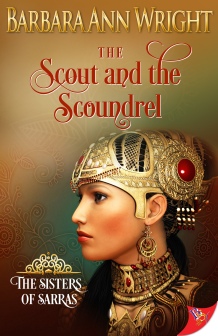 Zara del Amanecer’s purpose in life is to do her duty, whether as a noble or a scout. She never shirks her responsibilities, especially with missions as simple as this one: to reconnoiter the border with the Firellian Empire and report anything suspicious. Easily done, even with a new recruit conscripted from prison. Never mind that Veronique the thief ignites unfamiliar feelings in Zara, from furious loathing to overwhelming desire.
Roni can’t stop imagining how passionate Zara would be if she thought less about duty, or even if she cared more about survival. Because the Firellians have a new magical weapon no one suspected, and they’re not about to let anyone who’s seen it get out alive. In the sights of an empire planning invasion, Zara and Roni’s principles might not be the only things sacrificed.
Book 2 in the Sisters of Sarras Trilogy But it now on the Bold Strokes’ webstore.
Reviews for The Scout and the Scoundrel
“…a delightful character-centered story about trust and loyalty. Sarassian Commander Zara del Amanecer is socially awkward and ultra-rational. As punishment for a recent faux pas…her scouting squad is the first in an experiment in using prisoners as recruits, putting flirty, smart-mouthed thief Veronique “Roni” Bisset under Zara’s command and setting the stage for their opposites-attract romance…The series-long war plot progresses…and the interpersonal dynamics of the del Amanecer household reappear just enough to connect to the last, and presumably next, installment. Series fans will not be disappointed.”
“An unexpected delight, Zara appealed to me immediately…Her preference for solitude, difficulties reading social cues, and struggles to recognize other people’s feelings are just part of her character – precisely as they are my own. I identified with her deeply, and her slow burn romance with Veronique (Roni)…felt comfortably familiar. In the wrong hands, Zara’s uncertainty over Roni’s flirting could have been played for laughs or pity, but Wright makes it sweet and endearing, putting a fresh spin on the enemies-to-lovers trope…this is a fantastic narrative…a suspenseful, action-packed tale with environmental challenges and human conflicts…I am so hooked!…If you’re looking for addictive fantasy and engaging romance, then Barbara Ann Wright is well worth a read.”
Netgalley Reviews
- “What an adventure this is. There are twists and turns that keep you guessing. I enjoyed this and look forward to Barbara Ann Wright’s next adventure.”
- “I enjoy this read I won’t say much because I tend to spoil what’s happening especially when magic is involved but it’s is a great second book to the series.”
The Mage and the Monster
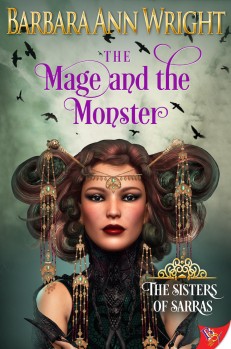
Gisele del Amanecer’s days look the same from the outside: work, home, and the occasional one-night stand that she hides from her nosy older sisters. But Gisele is a mage, and that means pain invisible to outside eyes. Each act of magic can be agony, but she loves the power, the bond with the unseen, and how only her will keeps the magic from consuming her. She can master any task, including saving her family and homeland from Firellian invaders—until she’s ordered to hunt another mage, one who may be her equal in power and commitment. One she might risk everything for.
Vale has been subjugated her entire life—to the point where she thinks she deserves it, but she is determined to save others from that fate. Magic has been her one bright spot, but now she’s forced to use that power to kill in the name of the Firellian Empire. Escape or rebellion is out of the question unless she can guarantee the safety of her fellow captives, but how can everyone make it out alive while surrounded by enemies? Perhaps with the help of another mage, someone who bonds with magic like Vale does, someone who might want her for herself instead of for her power. But war always demands a sacrifice.
Book 3 in the Sisters of Sarras trilogy But it now on the Bold Strokes’ webstore.
Reviews for The Mage and the Monster
“I have truly enjoyed reading the novels in ‘The Sisters of Sarras’ series by Barbara Ann Wright. …I’ve been delighted with all three books. The story of Gisele and Vale is a fitting conclusion to this series. It takes the characters and the narrative of the first two books and pulls us into a story that includes danger, adventure, and war. It’s also a chance for some, including Gisele and Vale, to find love and acceptance. There are quite a few twists and turns in the plot. This tale will definitely keep you wondering as you read.” —Rainbow Reflections
Netgalley Reviews
- “This was a nice ending to an engaging series and it was great to see all the characters from the previous books featured. The romance was a bit too instant for my liking but I very much enjoyed the storyline around the Firellian invaders and the kidnapped mages. The supporting characters were all very well developed and I felt like I was there with them trying to find the Firellians. I’d definitely recommend this series for fantasy lovers.”
- “This review took me a while because I read the previous 2 books to get up to date. And I think this was a great conclusion.I have a high taste in fantasy and this book and series hit all the right spots. The story grips you and I was interested throughout the book, and happy with the ending which normally I’m not when it comes to some fantasy books.”
- “A tale that took me through a rollercoaster of emotions but had me cheering on Vale and Gisele the entire time. I loved the found family theme that showed how connected everyone in the group was. Each character is so unique and plays an important role in the story line. There’s someone for everyone.”
The Pyramid Waltz
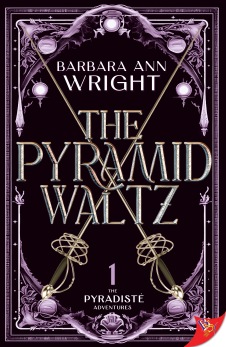 To most, Princess Katya Nar Umbriel is a rogue and a layabout; she parties, she hunts and she breaks women’s hearts. But when the festival lights go down and the palace slumbers, Katya chases traitors to the crown and protects the kingdom’s greatest secret: the royal Umbriels are part Fiend. When Katya thwarts an attempt to expose the king’s monstrous side, she uncovers a plot to let the Fiends out to play.
Starbride has no interest in being a courtier. Ignoring her mother’s order to snare an influential spouse, she comes to court only to study law. But a flirtatious rake of a princess proves hard to resist, and Starbride is pulled into a world of secrets that leaves little room for honesty or love, a world neither woman may survive.
Reviews for The Pyramid Waltz
“The mystery of who is trying to undermine the royals and let loose the terrible Yanchasa…weaves intrigue…amid the heartwarming blossoming romance between the princess and the courtier.
“…Wright…includes characters who are charming… along with a classic love story to be savored by the romantic in us all.
“…a healthy dose of a very creative, yet believable, world into which the reader will step to find enjoyment and heart-thumping action. It’s a fiendishly delightful tale.”–Anna Furtado, Lambda Literary
“Barbara Ann Wright is a master when it comes to crafting a solid and entertaining fantasy novel.
“The world of lesbian literature has a small handful of high-quality fantasy authors, and Barbara Ann Wright is well on her way…
“Lovers of the fantasy and futuristic genre will likely adore this novel, and adventurous romance fans should find plenty to sink their teeth into.”–Salem West, The Rainbow Reader
“The Pyramid Waltz has had me smiling for three days.
“I also haven’t actually read…a world that is entirely unfazed by homosexuality or female power before. I think I love it.
“I’m just delighted this book exists.”–Kit, The Lesbrary
“Chock full of familiar elements that avid fantasy readers will adore…this book adds in a compelling and slowly evolving romance between Princess Katya and Starbride… Set against a backdrop of political intrigue with the possibility of monsters and mystery at every turn, the two women slowly learn each other, sharing secrets and longing, until a fragile love blossoms between them…The scope of this book is enormous, and rest assured that there are many more in the series following the adventures of Katya and Starbride.”–USA Today Happily Ever After
 Winner of the 2013 Rainbow Award for Best Lesbian Fantasy. Also one of Tor.com’s Reviewer’s Choice books of 2012 and a 2012 Foreword Review Book of the Year Award Finalist as well as a Golden Crown Award finalist. One of Book Riot’s 100 Must-Read Sci-Fi Fantasy Novels By Female Authors. Listed on Autostraddle as one of the 100 Best Lesbian Fiction Books of All Time.
Available on the BSB site, Amazon, Barnes & Noble, and wherever books are sold. Read what people are saying about it on Goodreads.
For Want of a Fiend
 Princess Katya Nar Umbriel’s uncle Roland rose from the grave, kidnapped her cousin, and stripped her of her greatest weapon—her Fiendish power. Without her Fiend, Katya doubts her ability to weather the storm her uncle is brewing. When she lacks what even the children in her family possess, can she even call herself an Umbriel?
In only a short time, Starbride has become the princess consort, a pyradisté, and a member of a secret order in charge of protecting the crown. Even steeped in responsibility, she’s still an outsider. While wading through court intrigue and resisting schemes to break her bond with Katya, Starbride must prepare for a covert war. Roland is waiting, watching, ready for any chink in their armor, and he doesn’t care who knows their secrets.
Reviews for For Want of a Fiend
“Their evolving relationship continues to be one of the loveliest things about these books
“I love seeing a passionate, adoring romantic relationship flanked by friendships…of different weights and colors.
If you enjoyed The Pyramid Waltz, For Want of a Fiend is the perfect next step…you’d be embarking on a joyous, funny, sweet and madcap ride around very dark things lovingly told, with characters who will stay with you for months after.”–Kit, The Lesbrary
“I like Wright’s characters, and the central conceit of a noble royal family needing to keep a demon at the heart of their realm bound… it’s appealing.”–Liz Bourke, Tor.com
“My favorite characters returned, and they’re even MORE amazing in this book than they are in the first, if possible.
“I cannot wait for the next book…I know it’ll be well worth any way I must endure because Barbara Ann Wright’s books just keep getting better and better!”–Jennifer Lavoie, author of Andy Squared and Meeting Chance
“This book will keep you turning the page to find out the answers.
“Fans of the fantasy genre will really enjoy this installment of the story. We can’t wait for the next book.”–Heather Bennett, Curve Magazine
“A fun, unique story with a distinctive world. This series doesn’t imitate other popular fantasy
novels. It stands on its own. The writing is well paced and Wright incorporates a more modern or
colloquial language which makes the books easy to read. Overall, For Want of a Fiend was an
enjoyable read and I think you would like it if you are a fan of books like Game of Thrones or a
TV series like Reign.”The Lesbian Review
Available on the BSB site, Amazon, Barnes & Noble, and wherever books are sold. Read what people are saying about it on Goodreads.
A Kingdom Lost
 Princess Katya Nar Umbriel has little left to lose. Her uncle Roland took her home, scattered her family, and forced her to abandon Starbride, her dearest love. Slim hopes and righteous anger carry Katya into Starbride’s homeland to raise an army and take back all that was stolen from her.
Starbride never dreamed she’d lead a pack of foreign rebels against a Fiendish usurper. She holds the capital city out of love, denying any rumor of Katya’s death. As the two strive toward each other, Roland dogs their every step, loosing Fiend-filled corpses on Katya’s army and hypnotizing the capital’s citizens into hunting Starbride down. If they ever meet again, it’ll be over his dead body.
Reviews for A Kingdom Lost
“It’s a series I’m really enjoying… Will anyone survive? I’ll be tuning in next year to find out…”–Liz Bourke, Tor.com
“The setting and the world of the story are nicely original… There’s something touching about the way each character explores the home of the other… they’re learning about one another’s childhoods and culture and history. Barbara Wright makes it clear they are one another’s motivations, and that they’ve learnt from and inspired one another. It’s adorable, and very refreshing for me…”–kwerey
“There is only one other time in my life I have uncontrollably shouted out in cheer while reading a book. This book made the second…
Over the course of these three books all the characters have blossomed and developed so eloquently…
I simply just thought this whole novel was brilliant.”–The Lesbian Review
Netgalley reviews:
“The tension has been building through each successive book in this series, and this is the one reaching towards the tipping point. Danger on every side for Katya and Starbride; war looming—this is the instalment that will have you scrambling for the last volume!”
Winner of the 2014 Rainbow Award for Best Lesbian Fantasy Romance.
Available on the BSB site, Amazon, Barnes & Noble, and wherever books are sold. Read what people are saying about it on Goodreads.
The Fiend Queen
 Within the walls of her palace, Princess Katya’s best friend lies at her feet, close to death. Her pyradisté is overwhelmed by some mysterious power, and her former lady-in-waiting has stabbed her in the back. Wounded and nearly alone, Katya must find a way to sabotage the magic of her Fiendish uncle Roland, or those who fight for the capitol will be overwhelmed by hypnotized guards and Fiend-filled corpses.
Starbride’s pain is nearly overwhelming. The agony inside her only lessens when she satisfies a strange new desire to hurt those around her. She may hold the key to banishing Fiendish power from Farraday, but only by using it herself. Together, Katya and Starbride must make a final desperate push to take back the kingdom, but even if they survive, can the strength of their love keep them from madness? After all, fighting evil with evil has its consequences.
Reviews for The Fiend Queen
“The Fiend Queen by Barbara Ann Wright as well as the rest of the series (A Pyradisté Adventure) and its characters are now ingrained in my soul. I’m so sad that this is the last book in the series and I’m not ready to let it all go. I’ll probably never forget about this story, it has definitely taken a piece of my soul with it to the “to be read again” shelf.
There were so many amazing characters throughout the series. This book was no exception. I never got bored with the original characters because they always kept growing with the story. On the flip side, I never had a problem with any of the new characters introduced because they were all extremely likable.
After reading this series Barbara Ann Wright has made my favorite author list. Her writing always seems to sweep me away to another world. The pacing, characters, and language were all perfect.
…After finishing the series A Pyradisté Adventure I knew that I had found a diamond. I can’t wait to read the rest of Barbara Ann Wright’s works.
Read it! If you are into fantasy, I have no problem putting my name to recommending this book. I am obsessed and I don’t know how I will ever want to read a non-fantasy Lesfic ever again. I literally felt drunk off the series. Even after I was done with this book I thought about it constantly for at least two days.”–The Lesbian Review
Avaliable on the BSB site, Amazon, Barnes and Noble, and wherever books are sold. See what people are saying about it on Goodreads.
Lady of Stone
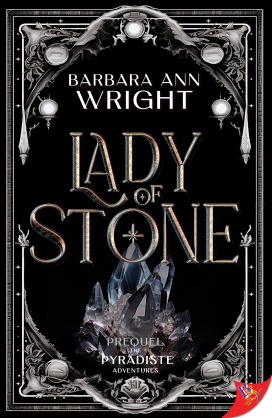 Lady Sylph’s only concerns should inheriting her title, marrying well, producing an heir, and lording it all over the peasantry. It’s what her father insists upon, and she never knew she needed anything or anyone else until her magic comes, an ability her class is not supposed to possess.
Thana never coveted the title of monarch’s pyradisté because her knowledge exceeds her ability. She hopes the royals will never depend on her, but then the palace’s pyramids go haywire. On top of that, a beautiful, spoiled noblewoman needs her help to conceal a new power.
Could Sylph’s ability and Thana’s magical mystery be related to a new kind of crystal being smuggled into the kingdom or a possible pyradisté coup? They’ll have to work together and overcome their biases, admit their feelings, and maybe surrender to their fierce desire before time runs out.
Reviews for Lady of Stone
“A prequel to her Pyradisté Adventures, Lady of Stone is a perfect introduction to Barbara Ann Wright’s world of fantasy and magic…Yet another stellar read from Barbara Ann Wright, Lady of Stone is a wonderful blend of magical fantasy and lesbian romance that had me eager to find out how it all ends, and yet reluctant to have it end.”–Femled Fantasy
“One of the best things about romance growing and expanding as a genre is how many classic tropes are getting the sapphic treatment — and if that’s up your alley, you might be interested in this title.” —Syfy.com
“A prequel to her Pyradisté Adventures, Lady of Stone is a perfect introduction to Barbara Ann Wright’s world of fantasy and magic….I had no trouble settling in and familiarizing myself with the world and its magic. The first thing that struck me about this is just how quickly Wright defines the classes of her world, and just how powerfully she outlines the prejudices between them…This a story I would describe as a plot-driven fantasy first (with violent scenes of explosive action) and a character-driven romance second (with passionate scenes of frustrated longing), but that mix does shift nicely in the second half. There’s a fascinating mystery…Interestingly, as much as this world is divided along lines of class and magic, it’s wonderfully open and inclusive of gender and sexuality…Wright allows the story and the romance to progress without any sort of secret, closeted angst…Yet another stellar read from Barbara Ann Wright, Lady of Stone is a wonderful blend of magical fantasy and lesbian romance that had me eager to find out how it all ends, and yet reluctant to have it end.”
Netgalley reviews:
“I’m not normally a fantasy reader but I enjoyed this book very much…he universe itself was well built and the concept of magic being a peasant thing was an interesting one…the plot was so action-packed it carried the story forward…I hope to be able to read the rest of the series at some point.”
Thrall: Beyond Gold and Glory
 Like heroes from an ancient tale, Aesa and Maeve plan to raid foreign shores, claiming gold and glory for their homeland. Young and in love, neither considers what will happen if one is chosen to be a warrior and the other is left behind.
On a mist-shrouded island, Aesa meets Ell, a woman enslaved by an insidious curse. Maeve walks the path of dark magic and finds Laret, a woman well acquainted with pain. Together, they must break the magic surrounding Ell, an act that will force them to choose between their dreams, their homes, and the women they love.
Reviews for Thrall: Beyond Gold and Glory
“The characters were likable, the issues complex, and the battles were exciting. I really enjoyed this book and I highly recommend it.”–All Our Worlds
“Aside from Aesa and Maeve, who are both strong women who want to do what’s right, there’s another great character in THRALL. Laret is the first transgender woman I’ve read in fantasy, and she stole the book for me.”–Leanna.me
“…incidents and betrayals run rampant in this world, and Wright’s style successfully kept me on my toes, navigating the shifting alliances… This is a story of finding one’s path where you would least expect it. It is full of bloodthirsty battles and witty repartee…which gave it a nice balanced focus…
This was the first Barbara Ann Wright novel I’ve read, and I doubt it will be the last. Her dialogue was concise and natural, and she built a fantastical world that I easily imagined from one scene to the next. Lovers of Vikings, monsters and magic won’t be disappointed by this one.”–Nikki Little, Curve Magazine
“Once more Barbara has outdone herself in her penmanship. I cannot sing enough praises. A little Vikings, a dash of The Witcher, peppered with The Game of Thrones, and a pinch of Lord of The Rings= Mesmerizing… I was ecstatic to read this book. It did not disappoint.
Barbara pours life into her characters with sarcasm, wit and surreal imagery, they leap from the page and stand before you in all their glory. I am left satisfied and starving for more, the clashing of swords, whistling of arrows still ringing in my ears.”–Lunar Rainbow Reviewz
“Barbara Ann Wright’s Thrall: Beyond Gold and Glory is clearly inspired by motifs from Viking and other northern European cultures…The writing in this one is quite good.”–Lesbian Historic Motif podcast
 Available on the BSB site, Amazon, Barnes and Noble and wherever books are sold. See what people are saying about it on Goodreads.
Paladins of the Storm Lord
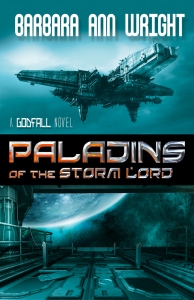 Surrounded by dead crewmates, marooned above an unknown planet, the bridge crew of the Atlas awakens from a crash with extraordinary mental abilities. When their most powerful member jettisons their passengers to the planet below, they have an unprecedented opportunity: they can become gods.
Two hundred years later, Lieutenant Cordelia Ross is a paladin serving the Storm Lord, her city’s patron deity. Her faith is absolute until her people are attacked by a native species, harmless creatures turned devious by an unknown hand. Cordelia tries to solve the mystery of their development before they kill anyone else, but the secrets surrounding them are too deep. As orders from the Storm Lord begin to value obedience over integrity, Cordelia wonders whose side her god is really on.
A Godfall novel, book one.
Reviews for Paladins of the Storm Lord
“…fun and fast and entertaining…”Liz Bourke, writer for Tor.com
“This was a truly enjoyable read… I would definitely pick up the next book. …the mad dash at the end kept me riveted. I would definitely recommend this book for anyone who has a love of sci-fi.”
“An intricate…novel[,] one that can be appreciated at many levels, adventurous sci fi or one that is politically motivated with a very astute look at present day human behaviour. …There are many levels to this extraordinary and well written book …overall a fascinating and intriguing book.”–Inked Rainbow Reads
“…my favorite of the author’s books that I’ve read. …I’d definitely pick up the next in the sequel to see where things progress.”–Cheri’s Book Blog
“I loved this. The set up with a colony ship experiencing a disaster and the survivors developing God-like powers was quickly and effectively drawn, with the politics and interplay of those on the ship excellently established.
The world that the Paladins inhabited was fascinating…
Simon Lazlo was a fascinatingly flawed character who knows that what he has done is wrong, but at the same time is still proud of the positive achievements of his work.
…didn’t want to put this down until I knew what happened. I’ll be looking for more of Barbara Ann Wright’s books.”–Lesbian Romance Reviews
“Paladins of the Storm Lord by Barbara Ann Wright was like an orchestra with all of its pieces creating a symphony. I really truly loved it. I love the intricacy and wide variety of character types…I just loved practically every character!
…I truly adored Shiv, one of the drushka females. She was just adorable and the perfect comedy relief. A lot of the characters had their own distinct personality which made the book absolutely interesting to read.
…The book was too the point, a lot of action, with great pacing and flow. My favorite was the way the drushka spoke I think Barbara Ann Wright did such a fantastic job with it…I would read a whole book about the drushkas!
Of course my fellow adventure lovers should read Paladins of the Storm Lord! It is hard to come by a good fantasy/action/adventure (kind of sci-fi) book.–The Lesbian Review
 Available on the BSB site, Amazon, Barnes and Noble, and wherever books are sold. Take a look at it on Goodreads.
Widows of the Sun-Moon
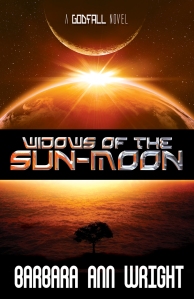 Naos is bored. Alone in space, life should be idyllic. No more random thoughts intruding on her brain; no bodies clogging her senses. But what is there to do besides stare at the planet below and wonder what it would feel like to be Calamity’s only god?
War between the other gods shouldn’t be too hard to start. The Storm Lord has a bad temper, and after being abandoned by Simon Lazlo, source of immortality, he’s easy to provoke. And the Sun-Moon live closely with Calamity’s plains-dwelling people and their new neighbors, a pack of humans and aliens led by the intriguing ex-soldier Cordelia Ross. With a plague ravaging their numbers, it will be easy to set them at each other’s throats.
A little war, a bit of death, and the chance to be Calamity’s only deity? It’s a game to keep even the most fickle goddess entertained.
A Godfall novel, book two.
Available to order on the BSB site and Amazon. Add it on Goodreads.
Children of the Healer
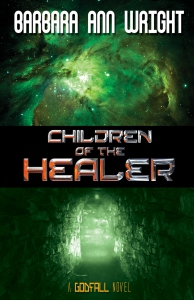
With the Storm Lord dead, Cordelia Ross and Simon Lazlo return to Gale, to normality, but when they find the populace poisoned by the drushka, it’s clear the aliens must be dealt with before life can be anything near normal. In the north, Patricia Dué takes control of Gale’s mine with Jonah, the servant she created in Dillon Tracey’s old body. She thinks controlling the humans’ only source of metal will bring her power, but her past won’t be banished so easily.
Amidst the chaos and conflict, a prophet predicts that true calamity is still to come, and the only way to stop it may be a murderous widow looking for revenge. As factions splinter and reconnect, the fate of Calamity lies uncertain, and even the prophets can’t see every ripple on the horizon.
A Godfall novel, book three.
Available to order on the BSB site and Amazon. Add it on Goodreads.
Reviews for Children of the Healer
“I was held spellbound several times by the beautiful prose of the story and that the characters, as unreal as they are, actually become quite real.”–Reviews by Amos Lassen
Inheritors of Chaos
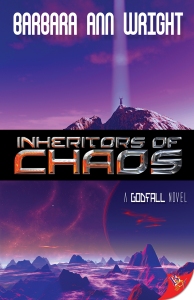
Naos has come to Calamity, and chaos has come with her. Cordelia had enough problems without teaming up with former enemies in order to defeat a mad goddess. And she doesn’t yet know that the Storm Lord has been resurrected in a new body. On the plains, the prophet Lydia is convinced that Fajir is the one chosen to stop a massive firestorm in the future, if only Fajir wasn’t so set on killing everyone around her.
With their murderous leader dead, hostilities have ceased among the drushka, but the long-living aliens are slow to adapt. The last thing they want is a drushkan king with powers none of them dreamed of before.
The conclusion to the Godfall series.
Available to order on the BSB site and Amazon. Add it on Goodreads.
Reviews for Inheritors of Chaos
“This was a good read. It was well written…I enjoy it for the most part and I’ll will be reading from this author again…I can totally see this on screen it had action revenge aliens powers.”
“I could see so many positives, like the characters and the world building…”
“It is [a] delightful read…”–Netgalley reviews
Not Your Average Love Spell
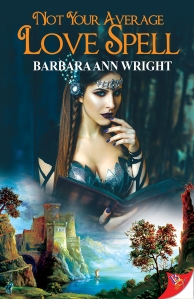
The Knights of Flame need to move their army across the country to defeat a brutal enemy. Tricky, as the knights have outlawed magic. They hire a researcher, Camille, to fix the problem and assign the dashing Major Sydney to help. If Camille and Sydney can keep their hands off each other long enough, they can surely come up with a solution.
Rowena the Hawk is a witch of great power and stubbornness equal to that of an entire phalanx of knights. Exiled from home, she has only her construct Ember for company until the most beautiful woman she’s ever seen dares her to save the world.
Wanting to cuddle one moment and strangle each other the next, the four women are the kingdom’s only hope. Everyone’s probably doomed…
Available to preorder on the BSB site. Add it on Goodreads.
Reviews for Not Your Average Love Spell
“Barbara Ann Wright mixes so much into her story – romance, comedy, drama, action, adventure – that it threatens more than once to collapse under the clash of themes, but those clashes and contrasts only serve to make it stronger and more engaging….a solid little fantasy tale with a lot of really cool elements… I liked what she did with that, exploring themes of fear, hatred, and discrimination in relation to it [magic], rather than race (which seems a non-issue), sexuality (which is casually accepted), or gender (female knights are not only common, they’re respected).
As for the romance, that was surprisingly sweet and amusing, with four women at the heart of the story who are entirely likable …the spark of attraction and the emotional connections are undeniable…Not Your Average Love Spell was everything I’d hoped for from the blurb – and much more. Whether you read it as a fantasy, a romance, or just a story that refuses to be closeted in one genre, this is an entirely satisfying read
“I enjoyed the story a great deal. The fantasy world that it takes place in was well fleshed out without leaving me feeling like there was too much exposition. I enjoyed each character for different reasons. They were each unique and fun to follow at the various stages of the book.”–NetGalley
“Not your average love spell is a great story filled with magic, wondrous creatures and adventure but what I really enjoyed about the book was the way that the characters grew. The adapted, challenged their own belief and customs and not only found true love but also became better people and leaned to accept others for the way they were. It is a great thing to read in these trying times and I took hope from it. The story pulls with enough magic to feel like a fully fleshed out fantasy world while keeping our heroes relatable and engaging
I give it a full hearted thumbs up and you should definitely check it out.”–Paper Phoenix Ink
“I thought this was a fun and entertaining adventure read…the fantasy aspects are very approachable.
While I have seen similar premises, with magic being banned and witches hunted down, the rest of the book with the way the whole plot unfolded just felt different and I loved that. What also really impressed me was the amount of action this book had. It was one thing after another after another all keeping me completely glued to the book…I could not stop reading.
The action was great and the characters where likable. It’s the kind of book to not take things too seriously and just have fun reading.”-Lez Review Books
“The adventures, as mentioned above, were plentiful. There are pirates and warriors, a yeti, giant
spiders, a possible dragon, lizard people, and in general, a lot of tough-headed knights. The plot
was definitely interesting, with a lot of twists and turns. The writing was seasoned with beautiful
writing and truths. I highly recommend this book to lovers of fantasy and to those that want
characters to be challenged to deconstruct what they know and learn how to live together. It’s a
beautiful book!”– The Lesbrary
“This story is told from the perspective of four amazing women. All of whom are such a joy to follow and root for. The story is very well crafted and constantly kept me on the edge of my seat.
These four women must work together to save the world from enemies unknown. Their adventure is thrilling.
The romance is sweet and honest and is very clean.
The writing was amazing and the mysteries constantly kept me guessing.
I loved this story and hope there are more stories following these characters in the future…”–NetGalley
“…entertaining… romantic fantasy adventure comedy? (I’m not sure how to categorise its Venn diagram of subgenres, either.) Starring an agoraphobic witch; a bright, curious, talkative homunculus; an archivist/scholar with a revolutionary bent; a knight who—at least initially—believes wholeheartedly in her order’s mission to stamp out magic; and an invasion of genocidal warriors, Not Your Average Love Spell takes its characters on an entertaining ride and delivers all of them a happy ending. (Except for the genocidal warriors. Their happy ending would be terrible for everyone else.)”–Tor.com
Links:
Coils
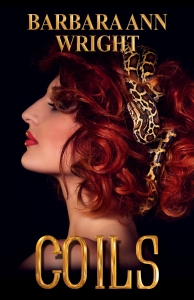 Cressida loves Greek mythology, tales of gods and monsters, but she knows they aren’t real no matter how awesome it would be to meet the beautiful women of myth. When her aunt June disappears, Cressida realizes the other members of her family aren’t so rational. June’s notes point to a possible entrance to the fabled Underworld before they cut off completely.
Following June’s footsteps leads Cressida into a world she knew only as legend, a place of marvels and danger, where the living are highly prized by the dead. Desperate, Cressida turns to Medusa, a demigoddess who’s been maligned by myth, but everything in the Underworld comes with a price. Medusa is more than willing to help find June, and all it will cost Cressida is one little murder.
Available to order on the BSB site and Amazon. Find out what people are saying about it on Goodreads.
Reviews for Coils
“…it was the cover that caught my eye and made me say ‘Self, you must check out the blurb for this one and hope you want to read it because damn, that cover is awesome.’ Okay, Greek myths, gods and monsters and a trip to the Underworld. Sign me up.
“Major delighted bonus points… So a good start, great Greek myth action and a late blooming romance that flowers in the end…”–Dear Author
“I found this book both a delight and informative. A love story and something more…
The characters are well developed and their wit will elicit more than a few chuckles. A joy to read.”–Lunar Rainbow Reviewz
“A unique take on the Greek gods and the afterlife make this a memorable book. The story is fun with just the right amount of camp. Medusa is a hot, if unexpected, love interest… A truly unexpected ending has us hoping for more stories from this world.”–RT Book Reviews
House of Fate
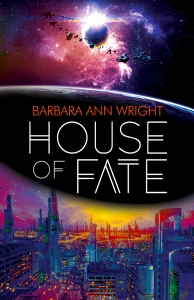 Judit has one duty: to guard the chosen one, he who will unite two warring, star-spanning houses in marriage. Simple, if she wasn’t already in love with the bride-to-be. As far as anyone knows, Annika has been raised to be the perfect bride and future matriarch. Secretly, she’s an assassin ordered to usurp the chosen one’s mind and kill anyone who gets in her way.
When the political landscape shifts, murders and abductions threaten to tear the galaxy apart. Judit and Annika race to uncover the source of the strife. It must be someone powerful and bold enough to risk throwing whole star systems into ruin, someone who could change destinies and bring two lovers together, if they survive.
Available from Bold Strokes Books and Amazon. Read what people are saying on Goodreads.
Reviews for House of Fate
“…fast, fun…entertaining… House of Fate delivers on adventure.”–Tor.com
The Tattered Lands
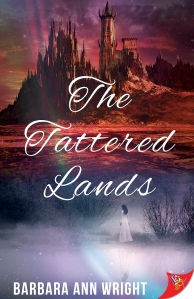
Humanity thinks itself safe. For over thirty years, ten mystical pylons have protected them from the plague of the evil, tattered lands. Now, one pylon has gone out.
Alchemist Vandra Singh knows an alliance with the elusive, xenophobic seelie may be humanity’s only hope if the other pylons fail. But among the long-lived seelie, only Lilani, young daughter of the empress, can forgive humanity’s ancient betrayals.
As Vandra and Lilani strive to make peace, they slowly fall in love. With mistrust and murder surrounding them, only their faith in each other can keep their plan to save the world from falling apart. And the tattered lands are waiting. One pylon down. Nine to go.
Coming September 2018!
Available from Bold Strokes Books and anywhere books are sold.
Reviews for The Tattered Lands
“Wright’s postapocalyptic romance is a fast-paced journey through devastation… Plenty of action, surprises, and magic will keep readers turning the pages.” —Publisher’s Weekly
“This is a fun, entertaining novel. The characters are interesting and appealing… I enjoyed it, and if you’re looking for light and fun, this is definitely a good bet.” —Tor.com
Amor and More: Love Everafter

Passion, lust, and desire don’t have to end with “I do”…
Rediscover favorite couples as Bold Strokes Books authors reveal glimpses of life and love beyond the honeymoon in short stories featuring main characters from favorite BSB novels. New tales of eros, romance, and adventure from the boldest and the best!
Featuring a new Katya and Starbride story.
Available on the BSB site, Amazon, Barnes & Noble, and wherever books are sold. Find out what people are saying about it on Goodreads.
 Barbara Ann Wright
Pingback: U is for Katya Nar Umbriel | Olivia Waite
Pingback: Provincetown schedule, see you there! | Missouri Vaun